

What does it mean to work in a hybrid environment?
Hybrid working is a working model that combines remote working(such as telecommuting) and face-to-face working (in an office or shared workspace) for employees, requiring them to be flexible and organize their workspaces differently, and to juggle their professional and personal lives. It allows employees to telework on certain days of the week, while still connecting with their colleagues. This combines the advantages of remote working, such as flexibility andautonomy, with the benefits of face-to-face collaboration andsocial interaction. Hybrid working became very popular with the COVID-19 pandemic. Because it enabled employees to continue coworking effectively while respecting social distancing protocols, and to promote a degree of creativity while being collaborative.
75% of French employees would like to adopt a hybrid work mode depending on their work environment . Such is the conclusion of this Adecco Group study published in June 2020.
But what is the source of hybrid work? Between 1850 and 1865to help feed a rapidly growing population (by guaranteeing stable agricultural production), G. Mendel carried out experiments on peas. The species are combined to produce a more efficient and resistant variety... This is a concept that stems fromagronomyand we find it today intertiary real estateIt's worth taking a detour into management science. The concept ofhybridization has been taken up in the fields of organization, human resources management, marketing and innovation management. Hybridization is an intermediary form between simple imitationon the one hand, andinnovationon the other.
Find all our articles on our blog page.
The source of hybrid work: how did we come to change the way we work?
How did we arrive at such an observation and such changes? We observed a general sense of frustration at all levels: employees, managers, HR and executives, which was affecting their productivity. This complicated period has enabled companies to take a hard look at how they operate internally and how they organize their work.
At the same time, individuals, on their own scale, have also followed the trend and understood the need to react to their working conditions in the workplace and ask themselves the right questions.
Above all, this emerging need stems from the health crisis, but has become a habit for employees who have had to leave their comfort zone and adapt to a new environment. It's a real upheaval in their habits and working methods.
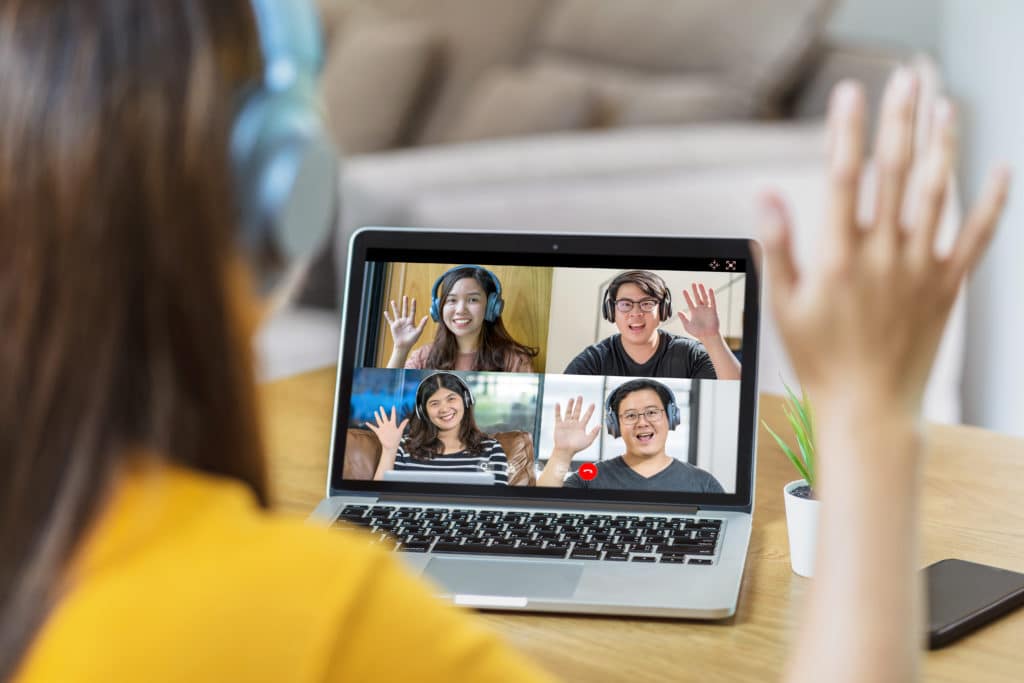
According to the Telework Barometer 2022 by the Comptoir de la nouvelle entreprise of Malakoff Humanis, at the end of 2021, 61% of teleworkers have specific facilities at home a dedicated room for almost a third of them.
In the same vein, Zoom asked Momentive to carry out a study entitled " Lhe future of work revisited "from which it emerged that more than two-thirds (69%) of those questioned would like to be able to choose for themselves whether they work remotely, in the office or a mix of the two.
.In search of a balance, people who are looking for work have decided not to accept the first job offered to them, but to look for a company that will give them the working conditions necessary for their well-being. Because it's true that hybrid work and telecommuting contribute to better day-to-day organization, for women and men alike.
The challenges of hybrid work 2023 :
Hybrid work consists of combining face-to-face work with face-to-face and remote distance. The challenges associated with this mode of working can include :
- Collaboration and communication : it can be more difficult to maintain good atmosphereand sharing when employees work remotely. This is why social networks networks are essential, as are internal communications.
- Managing productivity It can be more difficult to manage and maintain productivity when working remotely. With the results-based culture in France, archaic management methods need to be relaxed.
- Computer security: It is up to the IT DEPARTMENT to ensure that employees have everything they need to work efficiently. With telecommuting, employees must be able to work remotely in a secure manner. securelywherever they may be.
- Managing work-life balance Working remotely can mean greater flexibility flexibility. It can also be more difficult to separate work and personal life. To ensure that the employee experience is not negatively impacted, follow-up and support must be given to employees.
- Quality of working life Quality of work life: it can be more difficult to maintain a good quality of work life for employees who work remotely. The cohesion between teams is vital, and to promote it, we offer time for exchange are necessary. In addition, the corporate culture represents the foundation for employees, enabling them to find meaning. This also involves interactionsand informal time.
To find out more about these topics, discover our webinars or another testimonial like the one from Crédit Agricole Normandie-Seine.
Best practices in hybrid working: involving employees in the process
We need to involve our employees in this organizational shift. To make them aware of the risks of the risks that telecommuting for example, you can organize a time dedicated to raising awareness of this change. In this context, training courses, presentations by health professionals or even common-sense practical information sheets can be put in place as part of a policy that will only work if employees feel concerned and involved in the process.
You can therefore set up training, exchange and training, exchange and sharing sessionswhich are all the more important at a distance. You need to actively listen to their needs. This may lead to new informal times to be established to enhance social social ties and integration of potential newcomers.
These psychosocial risks are real obstacles tofulfillment for employees, so it's sometimes a good idea to call in psychological support. psychological support. At the same time, surveys can be carried out to "take the temperature" on the employees' side. Managers need to be able to listen and readjust their management if necessary. Generally speaking, it's important to allow a certain amount of autonomy and create a relationship of trust relationship with teleworkers, with the aim of boosting productivity and and creativity.
Telework agreements: a regulatory framework to make hybrid working sustainable
Establishing a framework is essential to keep employees focused and motivated. That's why management to define the rules for supervising employees, and this is sometimes achieved through telecommuting agreements. In this case, employees are entitled to a certain number of teleworking days, and must restrict themselves to them. According to the Malakoff Humanis teleworking barometer of 2022, 82% of employees (who are eligible for telecommuting) want to adopt this way of workingand 63% of managers believe it will continue to grow.
The managers are also there to regulate potential outbursts. They need to be trained to do this. Alongside this telework charterthe company can offer interactive written guides to best practices and tips, tips related to telecommuting. For some people, telecommuting has been a blessing, but others have had difficulty adapting to it and establishing new reference points at home.

As a result, these little tools can be real helpers for employees. Everything to do with the corporate social network with the necessary disconnection times or even recommendations in terms of d'work organization can be addressed. In conclusion, all these actions are directly linked to well-being at work regardless of where they work. Highly adaptability to make this system viable within companies, enabling them to move from the open space or the meeting room to their personal lives and thus improve their quality of life at work.
The importance of HR and managers in a teleworking policy
According to the second survey published in March 2022 by the French HRD Association (ANDRH), more than three out of four HRDs say that "offering hybrid work is important, if not indispensable" to make the company attractive and retain employees. 93% of those surveyed said that this type of flexible working is changing the role of management. Indeed, with these new working methods, management management techniques have to be reviewed. The managers and HR need to be involved and inventive. They play a crucial role in motivation and creating within the organization. Agility and flexibility are the watchwords for creating a reliable, sustainable organization.
The managers must be able to change hats and no longer be just leaders. leaders but also coaches. It's even common to question the word management, which no longer defines today's companies. Young professionals find the job difficult and are no longer attracted to it. The job needs to be upgraded, especially in the wake of the current crisis and the increasing responsibilities than usual.
The HRleads the transition to change and sets an example. Their role is therefore central. They support management in particular. This increases their workload, but when properly implemented, they can become leaders of change. leaders of change. Hybrid working is set to become the norm, stabilizing by 2025 at around 2 days telecommuting per week on average: this is the conviction of 46% of HR managers questioned in February 2022 for the ANDRH survey.
To find out more about these topics, visit for interviews such as this one with Forbes Italy.
The benefits of teleworking for employees :
- More autonomy :
Employees can better manage their working hours and organize themselves according to their needs. needs and their needs and desires.
- Time savings :
On average, we spend 1h24 a day on public transport in Paris. According to a study by the Institut d'Aménagement et d'Urbanisme, employees gain this extra time every day.
- Éinancial conomies :
Less transportationtravel, parking, catering and property expenses. property expenses.
- Better quality of life :
Well-being of employees by working from home, more time with the family, less mental workload.
- More environmentally friendly :
Less use of transport, less pollution.
The profitable aspects of the model mix for managers :
- Reduced absenteeism employees can work from home, with less need to take time off perhaps, fewer delays, sick sick leave or absence in general.
- Greater profitability : reduced workspacelower real estate costsreal estateThis money can then be reinvested in different projects.
- Attractiveness of talent A survey by the BVA institute, among young professionals aged 18 to 34, 33% (one-third) say they would like to leave their job. leave their current their current job. The main reason isexhaustion and/or lack of recognitioncited by 52% of them. Next comes the desire to achieve a better work-life balance (25%).
- Improved productivity employees have fewerunforeseen eventsand delays so they can concentrate on their work and be proactive, productive and creative.
- Ecology the hybrid work advocates a more sustainable environmentally-friendly system with less pollutionreduced use of transport for commuting.

The main disadvantages of abusive teleworking for employees :
- Occasional distraction managing children at homefamily intervention, household choresetc.
- Difficulty in standing out According to Le Monde, a telecommuting employee is 50% less likely to be promotedor receive a pay rise.
- Feeling of isolation less time for sharing, informal informal times such as after-work sessions, teleworkers can feel feel excluded.
- Computer difficulties some don't have access to a good internet connectionconnection, or adapted computers, or a room dedicated to their work.
- Integration problems In some cases, new arrivals will find it difficult to establish social ties with their colleagues.
Potential disadvantages of abusive teleworking for employers :
- Weakened team cohesion employees are less likely to collaborate, which can affect their productivity in parallel with the lack of face-to-face contact.
- Abuse of free time employees no longer work under the watchful eye of their managers, they may be distracted, a relationship of trust is needed.
- Loss of corporate values values values are forged and felt through the presence of employees in offices, telecommuting, etc. telecommuting can undermine this.
- Underestimation of talent employees may find it difficult to to demonstrate their abilities telecommuting, as recognition from superiors is more difficult to convey remotely.
- Organizational difficulties transition to a hybrid hybrid mode requires a real investment in terms of time andcommitment.
Adopt hybrid working
In conclusion, it seems beneficial for everyone to adopt the hybrid working within companies. Hybrid working is ideal for businesses if it's well managed. That's why it's important to get support during the transition transition to hybrid working. That's what we offer at Jooxter thanks to our teams and our web and mobile application. Don't hesitate to contact us if you'd like to know more.
For companies, the advantages outweigh any potential stumbling blocks. As with any internal corporate change, this takes time, which is why it's important to set clear objectives objectives with an HR policy policy.
However, the risks associated with telecommuting are very real, and each company will have its own experience. its own experience experience with hybrid working. There will always be time to readjust your organization and your employees will understand this. To err is human, and to make mistakes is to improve. So let yourself be tempted by new models and you'll see nothing but long-term benefits: productivity, creativity, investment, confidence, autonomy.
You will find the example of Crédit Agricole Normandie-Seine who offered us this testimonial.
You won't be disappointed if you haven't already adopted it! More productivity, more confidence, a better office atmosphere. But above all, you'll save money on your real estate, and attract more talent - what more could you ask for?
Bringing people together for a more
working environment
Every day we make your workspaces smarter